How to Start Being Open to Feedback
A practical quick-start guide to developing one of the most valuable skills for personal and professional growth
💡 For comprehensive learning, consider joining our structured course
Understand what feedback is, when and why it's valuable
Criticism triggers a real physiological pain response. Your ego will try to filter out what it doesn't want to hear. Start your path to understanding by listening to the podcast episode 'How to Love Criticism' that explains why feedback is triggering and what you can do about it.
🎧 Listen now →Build your challenge network
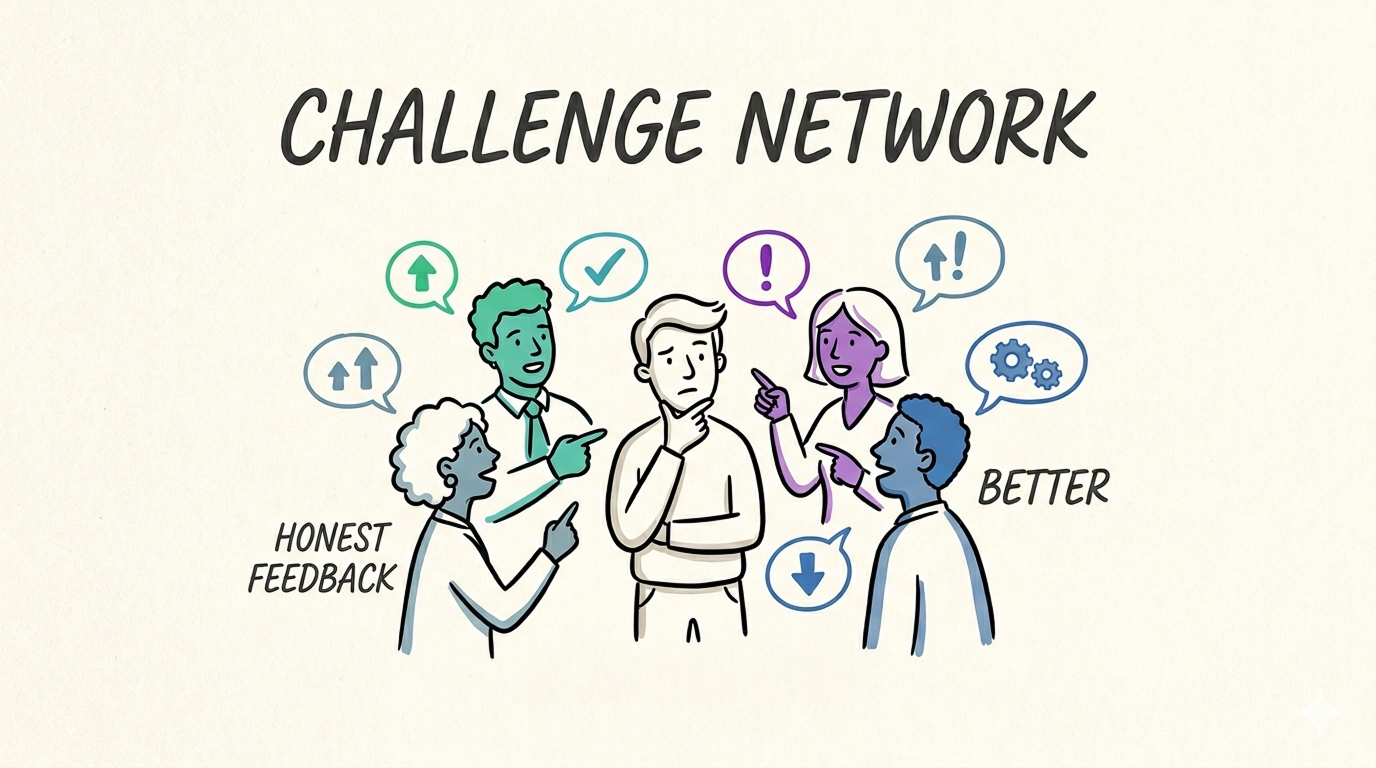
Identify one or two people in your life who will push back on you honestly. Not your cheerleaders, the people who'll tell you what you need to hear. That's your challenge network. Then make it easy for them by explicitly asking them to give you feedback regularly, not just when something goes wrong.
📄 Download the guide →Practice Asking for & Receiving Feedback
Start small and build your comfort level. Here are some practical ways to begin:
- Ask specific questions like "What's one thing I could do better?"
- Send a short feedback form after meetings, presentations, or projects
Reflect & Decide What to Action
Give yourself a second score
When feedback arrives, notice how well you received it. The first score is the feedback itself, you can't change it. The second score is how you responded to it. Were you open or defensive? Did you listen or shut down? That second score is the one you can actually work on. After each feedback conversation, ask yourself: how did I take that?
Now unpack the feedback. Process it thoughtfully. Ask yourself:
- What's not clear? What clarifying questions should I ask?
- What might be true or useful in this feedback?
- How can I best act on the most valuable insights?
- What patterns am I seeing across different feedback sources?
⏰ When's the Best Time to Ask for Feedback?
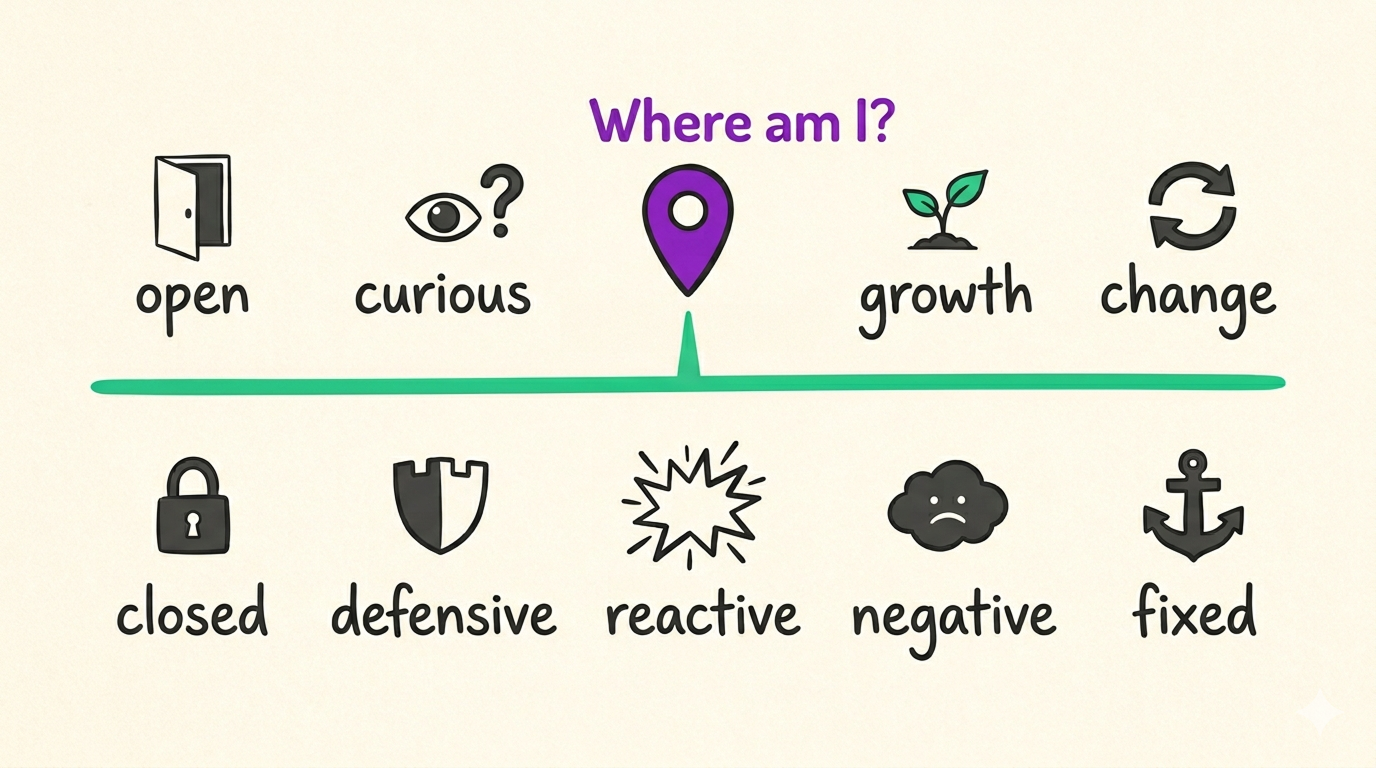
The best time to ask for feedback is when you're "above the line" — in a positive, open, and curious mindset. Being in this space helps reduce your natural defensive response to potentially challenging feedback.
If you're feeling defensive, stressed, or overwhelmed, it might be better to wait until you're in a more receptive state of mind.